
Being Human is a Thoughtful Process: Pragmata Review

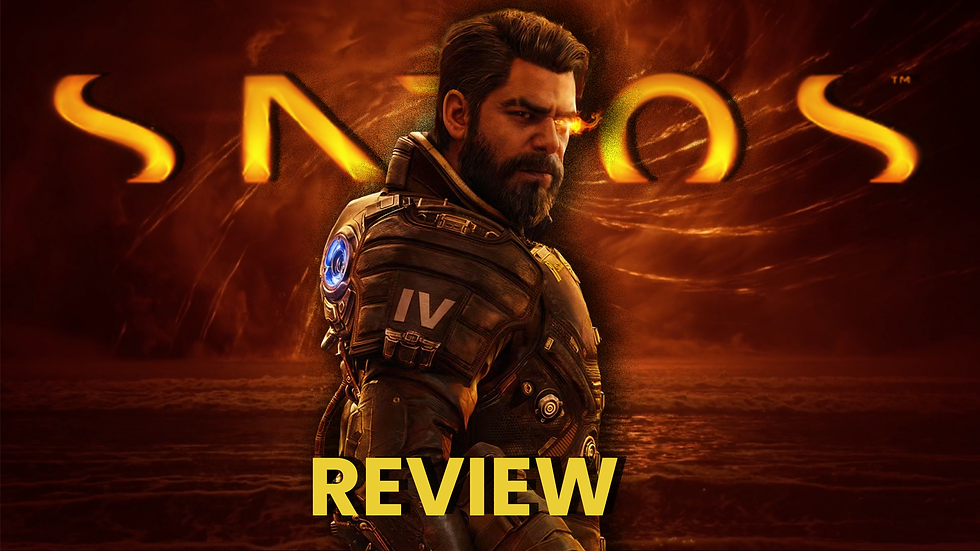
BE AWARE THERE ARE MASSIVE SPOILERS IN THIS ARTICLE! Space is pretty cool when you look at the grand, unknown nature of it all. Contemplating what's out there and exploring its grandeur in a game is truly thrilling. Every game that has a space setting is its own unique thing. Alien Isolation mastered horror and pacing; Destiny dove into exploration and an incredible story in a massive world; and even Signalis approaches the space setting in a way that exudes a more traditional horror experience. Instead of trying to be something it's not, Pragmata, Capcom’s newest IP, takes center stage and creates its own space to exist in, becoming its own creation. While the main story is simple and not anything special, Pragamata, at its core, has a much deeper intent tied to the very basic storyline guiding the ship.
Pragmata did a lot of things right, in terms of the mechanics, graphics, characters, and replayability. There were moments, though, that also fell flat in terms of the story's development, and subtle dog whistles that may not be intentional on Capcom’s side, but need to be addressed nonetheless, given how this game is attracting the wrong types of viewers. Thankfully, Reddit sites were banned, and Capcom is actively reporting heinous activity.
Having the Difficult Conversation
Before I talk about the mechanics, the story, and the father-daughter bond between Hugh and Diana, we need to discuss something very important: the unintentional placement of dog-whistles in Pragmata. This has already stirred controversy and caused many of us to discuss the uncomfortable yet important topic of this game falling into the wrong hands. Pragmata is a wonderful game about a young android girl learning about humanity, from friendships to a simple high five. This game is a beautiful reminder that children learn from the environment they exist in and the adults around them.
So when I saw a couple of aspects of how this game was approached, it made me angry. The first dog whistle that caught my eye was Diana biting down on the mod to gain data. I think Capcom could have approached this better in terms of how Diana consumed data. She could have hovered her hand over the computer the same way she hacks enemies. Another huge issue I have is the Cryana Twitch chat badge that Capcom implemented for those who purchase or gifted subs to those playing Pragmata live on Twitch. The Cryana badge bears resemblance to a pedo meme that has been on 4chan for a while now. Now, I didn’t know what this was until it was brought to my attention before writing my review, so let’s fill in some of the gaps for context.
Back when X was called Twitter, there was an account that replied to a Twitter post of a child with several crying face emojis. Now, the person responsible was banned from the platform, and this, unfortunately, became a meme that turned into a pedo dog whistle. This meme eventually reached a website called 4chan. And because of this person's post, there were many Twitch emotes that started to emerge and had underage anime females crying. Seeing the history of this, and understanding the context, will maybe give some a lens into why I think this is as big a problem as it is. Now, to be frank, from a place of pure assumption, I feel that Capcom may not have known about the controversy surrounding the emote, so I am saying everything I am in an effort to educate both Capcom and you, the reader.
Also, her being able to charge from her feet…Was weird, not as alarming, but still very strange, as well as the context of her needing to be barefoot. Just as an aside, you can get different costumes that equip her with shoes. And on top of it, while this next one isn’t necessarily a dog-whistle, it is more of a “this was unsettling to me, so let’s address it.” Ever since the launch trailer, I remember her appearance feeling very “Uncanny Valley”. It was strange seeing a portrayal of a child in this manner, acting like an adult. Maybe it's because the only reference she has to go off of is that of another adult she's with, so I’m not sure.
I liked Diana's character when it came to her inquisitive curiosity, but a lot of it boils down to the fact that Diana is an android that is actively seeking human treatment. So it seems strange and unfair to say “hey, let's personify this android and give her human characteristics that will never be realistic in any way.” That’s where the added weirdness comes in, which also ties to the story where multiples of the Pragmata were made as test subjects to find a cure for Dr. Higgins ' daughter, Daisy.
So going in, the human aspect that’s present is with the doctor yearning for the daughter he lost, creating a vision of her that, simply put, is a dream based on grief. After everything I’ve mentioned, plus the context of the story, it produces a very uncomfortable picture overall. I wish Capcom had done their research before implementing the Twitch badge, and also had possibly hired consultants for the other issues mentioned. The way in which Diana consumes data and the Twitch emote are by far the biggest red flags.
The Mechanics are a Dream Come True:
Now, before we fully dive into the mechanics, I want to give flowers where they are due to the accessibility! As someone who gets motion sickness very easily its rare that I come across a game that tries to solve a very annoying and uncomfortable problem. Pragmata implemented a “Motion Sickness Setting.” The motion blur, lens distortion, and depth of field are all turned off, leaving only the center reticle display on! This has helped me immensely when it comes to how I play the game, so thanks, Capcom, for caring about those with motion sickness.
Going into how this game plays, I was shocked and in awe over being able to hack enemies and shoot them at the same time. The mechanics were smooth, and I thought that hacking and shooting at the same time would seem messy, but everything was done so well to the point of no bugs, no glitches, and minimal lag in response time. The weapons were good, not amazing, but I really had to be picky when it came to how I wanted to approach not just the enemies but the bosses as well, in terms of what weapons were best to use.
Each boss you see has a weapon they are weaker to, which is a carefully constructed implementation that makes for exciting gameplay! The bosses were one of, if not my favorite parts of the game. The variance, the stylistic differences, and the movesets were unique to each one. The Sentinel and IDUS were my personal favotires, those two fights exemplified incredible work when it comes to battle mechanics and how each fight is difficult yet fun.
There’s No Guide To Being Human:
The story of this game is mediocre when it comes to the goals you need to complete and the linear purpose of what’s driving the game. The real story, I feel, is with the growth of Hugh and Diana. I greatly enjoyed seeing Hugh go from disliking kids to now actively caring about the little Android girl. Can we also appreciate that Huge has character, sarcasm, and wit? He’s not just another space bro with zero personality. I can see myself going to lunch with Hugh and him cracking a pun, or commenting on how the soft-boiled eggs are too runny. The bond and growth of both Diana and Hugh exemplify how a first-time parent grows as a person while raising their first child. He actively chooses her over himself, even though she’s just an android.
There were tears in my body that knew no bounds, and I had to provide an exit strategy for the emotions that consumed me. That ending was painful, not just because Hugh sacrificed himself so Diana could see Earth, but also because, at the end, he grew to understand the grief Dr. Higgins felt. The cure that he was trying to obtain for his daughter, on top of the emotion of each pragmata failing, was raw, human, and now with Diana. Children are sponges and incredibly perceptive. Diana, during the game, would ask if she did a good job, looking for that reassurance that the Dr. never gave her.
Diana’s growth and learning about the human condition, learning how to do a high-five, and understanding that when you fall, you get hurt. These are all basic things that children learn when they are understanding the world around them, and experiencing humanity. In this respect, the game was fantastic; it shows the human condition in all its colors, the vibrancy of happiness, the worry, the grief, all of it. Diana's excitement to see Earth, to understand friendships, these are all very human wants. Capcom beautifully executed the pureness of thought and curiosity through both an adult's and a child's eyes. For example, “sharing a meal is more than just recharging, talking with someone who just accepts you for you is a kind of nourishment, but…for your soul.” This is what the human condition is all about: it's about connection, that nourishment of the soul, which is showcased in this game beautifully.
Final Thoughts:
I would highly recommend picking up Pragmata if you’re planning to get it. While yes, there are questionable things that I don’t approve of, or think should be in a game, like I have mentioned. The game does a lot of things really well. The mechanics are amazing, the bosses, and the hidden, more intentional story (not the main one). All of that was well composed and filled with an intent that went beyond just making a cool action game. The story and essence of Pragmata encapsulated the human experience, always questioning, learning, and growing.


Comments